Should You Offer Seller Financing When Selling Your Business?
Should You Offer Seller Financing When Selling Your Business?
If you're planning to sell your business, you probably expect the buyer to arrange financing and pay the agreed-upon purchase price at closing. After years of building and operating the company, you may have little interest in becoming a lender yourself.
However, many buyers approach acquisitions with a different expectation. According to the BizBuySell Q2 2026 Insight Report, 90% of surveyed buyers expect seller financing to be part of their acquisition strategy, while only 29% of surveyed owners plan to offer it. These are survey expectations, not the share of completed transactions involving seller financing.
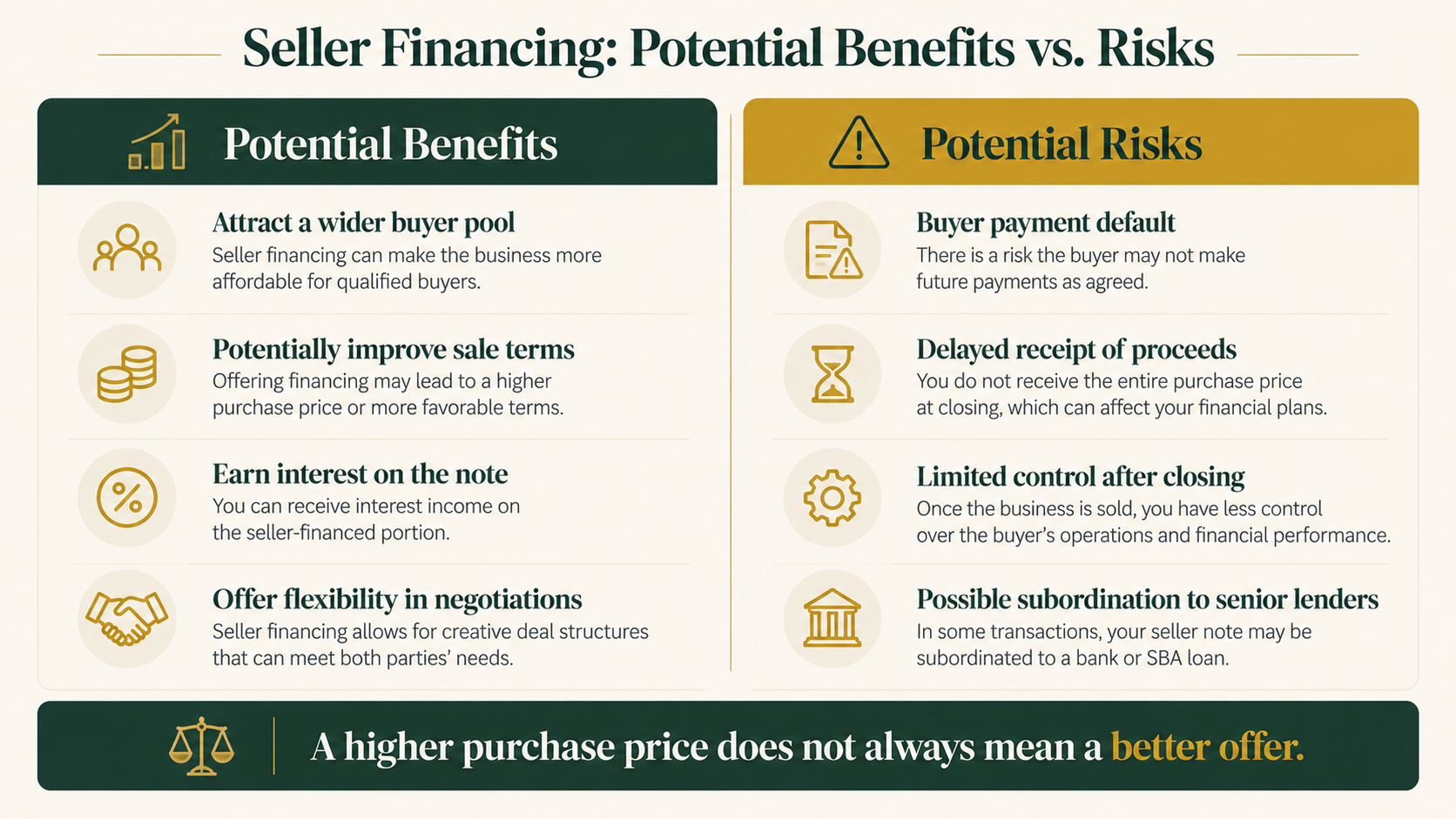
Seller financing can help complete a sale, expand the pool of potential buyers, and sometimes support more favorable transaction terms such as partial tax mitigation. It also exposes the seller to repayment risk and delays receipt of part of the purchase price. The right decision depends on the buyer, the business, the note terms, and the seller’s financial objectives.
What Is Seller Financing in a Business Sale?
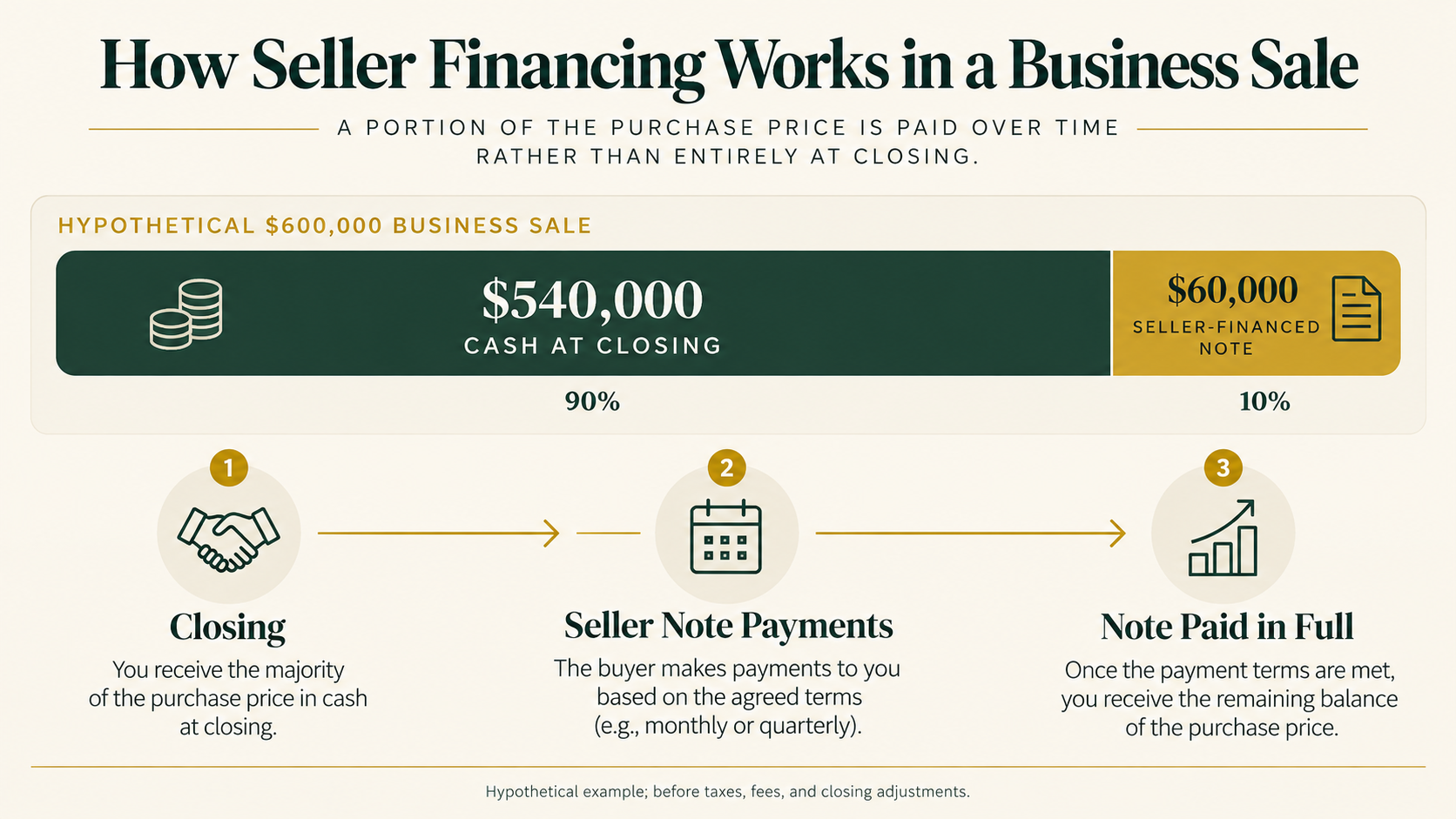
Seller financing, sometimes called owner financing, is an arrangement in which the seller receives part of the purchase price over time instead of collecting the entire amount at closing. The buyer signs a promissory note with a securities agreement specifying the principal, interest, repayment schedule, maturity, and other terms.
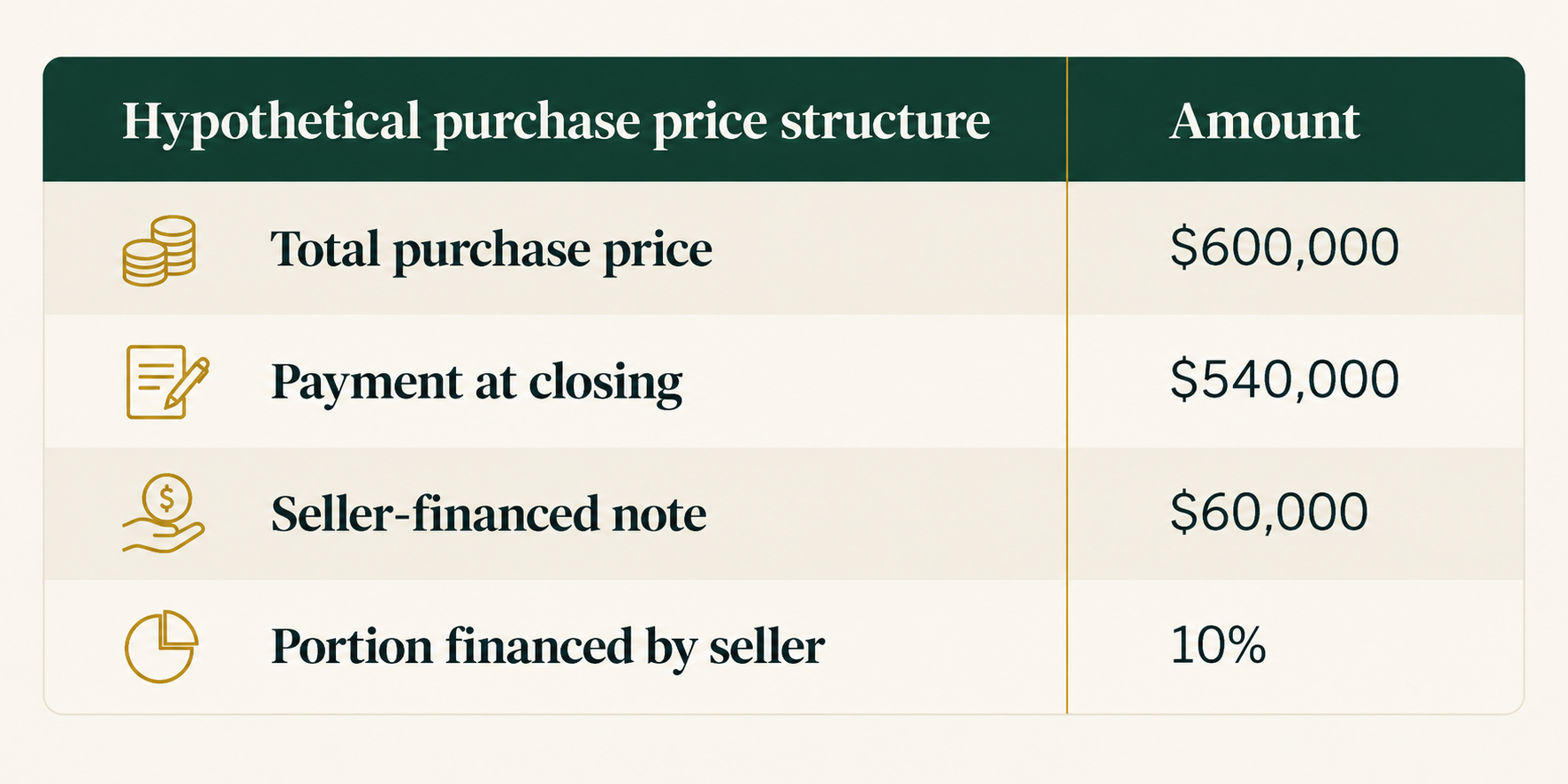
In this hypothetical transaction, the seller receives $540,000 at closing and holds a $60,000 note. That note is not equivalent to cash received at closing: collection depends on the buyer’s future performance and ability to pay.
Why Do Buyers Ask for Seller Financing?
To make the acquisition financially workable
Acquisitions may require funds for inventory, working capital, professional fees, and investments after closing. A seller note can help bridge a financing gap. Sellers should distinguish a qualified buyer seeking a reasonable structure from a buyer who lacks the resources to complete the transaction.
To demonstrate the seller’s confidence
Buyers may interpret a seller’s willingness to hold a note as confidence in future operations. But declining to offer financing does not mean the seller lacks confidence. An owner may simply need the proceeds for retirement or prefer not to retain financial exposure.
To bridge a difference in valuation
A seller may emphasize historical results or future opportunities, while a buyer focuses on current earnings and execution risk. Financing may help the parties negotiate a workable arrangement, but it does not automatically justify a higher value. The timing and collectability of payments matter.
Lender requirement
Currently most SBA 7a bank lenders are requiring a small portion of seller financing to make sure the owner has a small amount of skin in the game. The bank just cares about the deal cash flowing to cover debt service so additional seller financing could be required to make sure that a specific purchase price is achieved while also being able to have the buyer comfortably paying the debt note. Please note, in these scenarios, the seller can accrue interest the whole time immediately after the sale, but payments to the seller might not happen until year three. Contract your Transworld Business Advisors business broker to help connect you with lenders that can explain your options further.
When Might Seller Financing Benefit the Seller?
It can broaden the buyer pool
Qualified buyers sometimes prefer a combination of cash, acquisition debt, and a seller note. Reasonable flexibility may make a transaction possible for an otherwise suitable buyer, although screening financial qualifications remains essential.
It can improve the overall offer structure
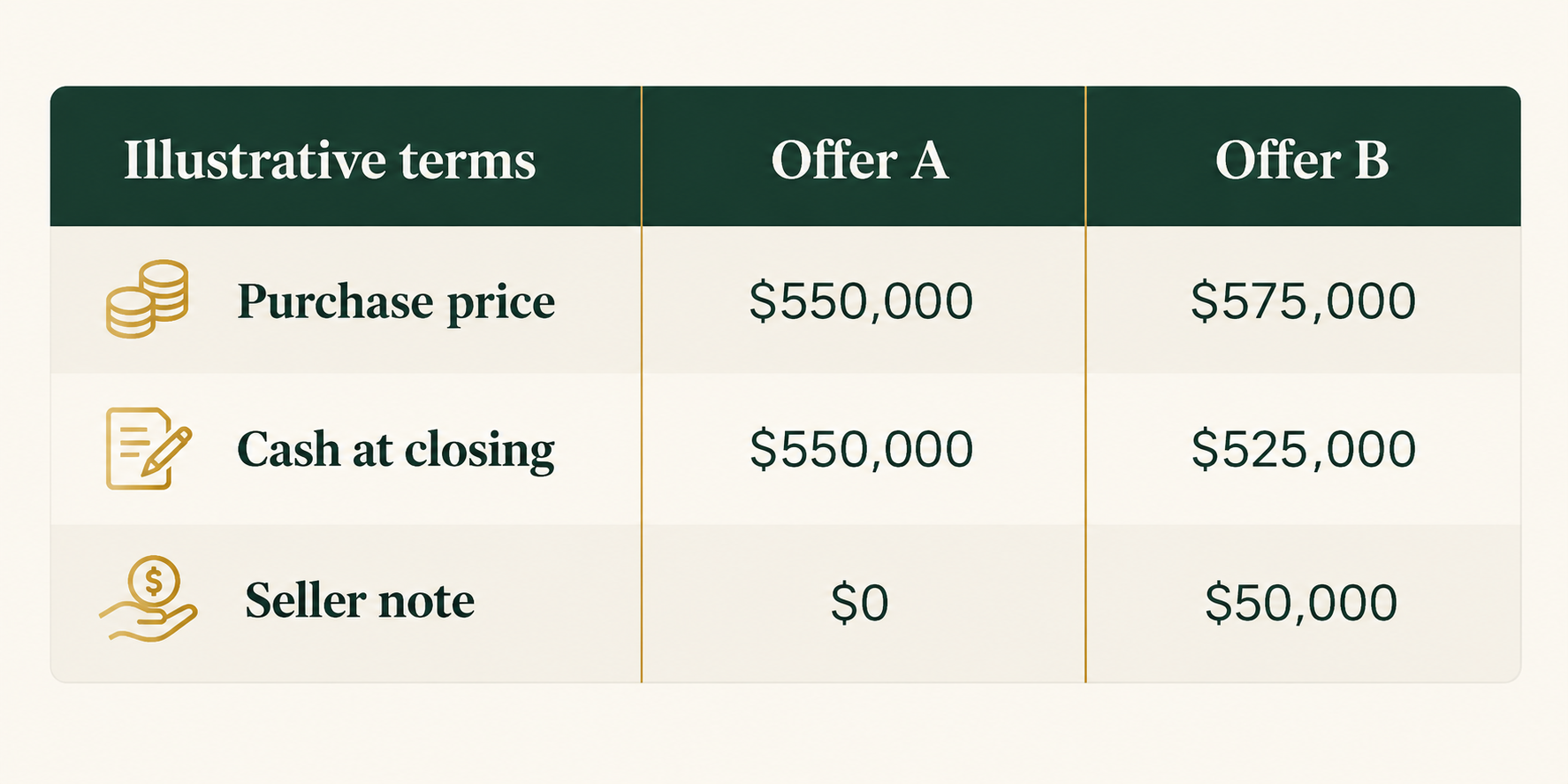
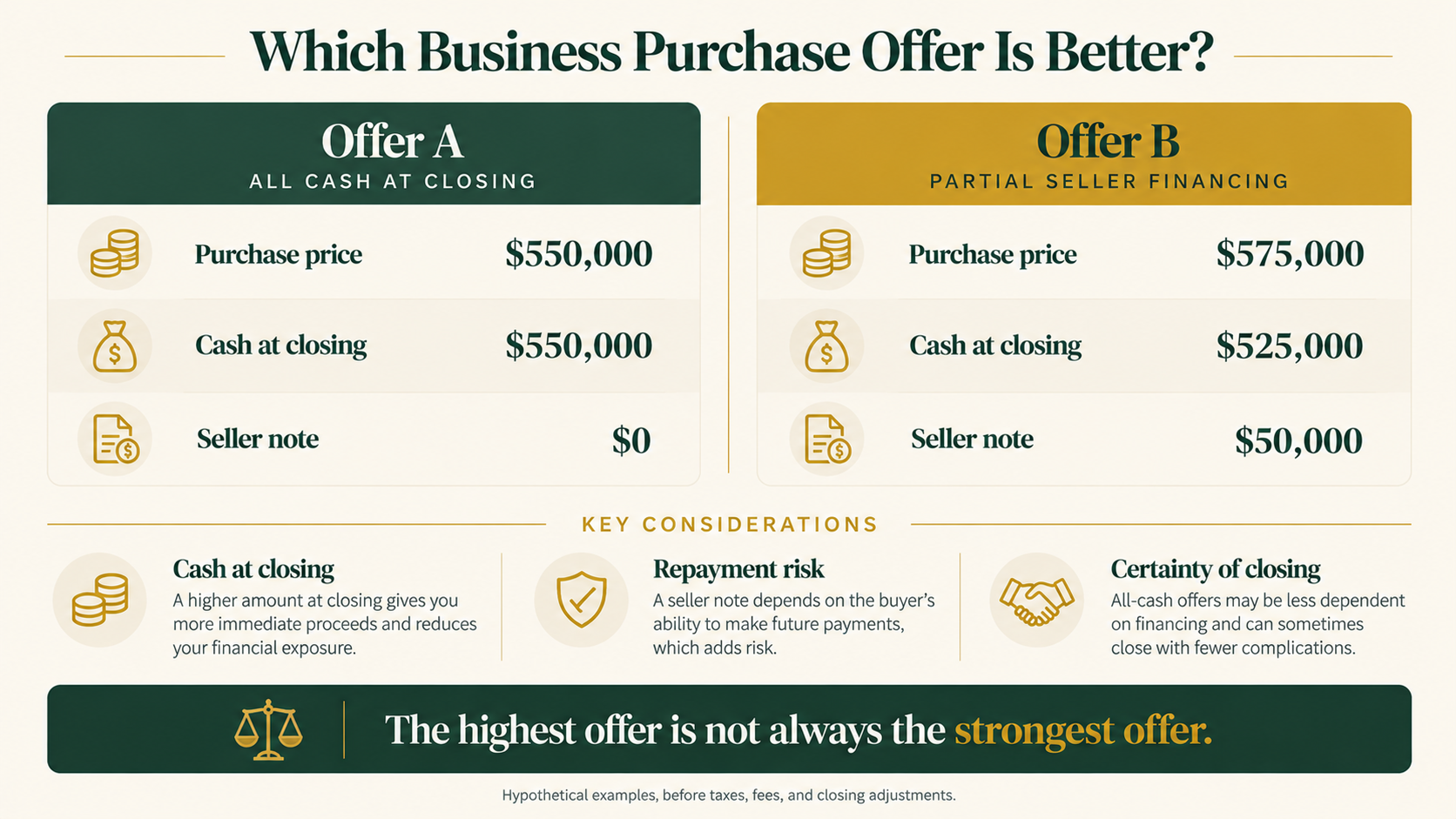
Offer B has the higher stated price but delivers $25,000 less at closing and leaves $50,000 exposed to repayment risk. Which offer is better depends on the note’s interest, security, payment timing, and likelihood of collection.
It may provide interest income
A hypothetical $50,000 note bearing 8% annual interest and amortized monthly over five years would require payments of approximately $1,014 per month and generate about $10,829 in total interest if every payment is made as scheduled. This illustration excludes taxes, fees, and default risk.
It may affect tax timing
Receiving payments over time may affect recognition of taxable gains, but installment-sale rules are complex. Inventory, depreciation recapture, interest, and purchase-price allocations can receive different tax treatment. Owners should consult their tax advisors rather than assume seller financing automatically reduces taxes.
What Are the Risks of Seller Financing?
The buyer may default
Declining sales, unexpected expenses, employee departures, or poor management can affect the buyer’s ability to pay. Collection and enforcement can be costly, slow, and uncertain even if the note is legally enforceable.
The seller loses operating control
After closing, the buyer generally controls hiring, pricing, suppliers, and strategy. Those decisions can affect repayment, leaving a retired seller financially exposed to a company they no longer operate.
The note may be subordinate to bank debt
A senior lender may require subordination or payment restrictions. Collateral and security rights may provide less protection than a seller expects, particularly when a bank has first-priority claims.
The seller may need the money sooner
If the proceeds are needed to fund retirement, repay debt, or meet another immediate obligation, delayed payments may not fit the seller’s financial plan.
How Can Sellers Protect Themselves?
A seller should evaluate the buyer’s financial strength, industry experience, available collateral, proposed repayment schedule, and legal documentation. Potential protections include a properly documented security interest, appropriate guaranties, financial reporting requirements, and clear default provisions. None guarantees collection, and their value depends on the actual circumstances and senior lender rights. Experienced transaction counsel should review the documents.
How Does Seller Financing Work With an SBA Loan?
BizBuySell’s Q2 2026 survey reported that 78% of prospective buyers expected to use SBA financing. Seller notes may be part of an SBA-financed acquisition, but they must meet the lender’s underwriting requirements and applicable SBA rules. Treatment can depend on the note’s role in the equity injection, standby requirements, subordination, and payment timing.
Because SBA guidance changes, including updates in 2026, sellers should confirm the proposed terms directly with the buyer’s lender under current SBA guidance. A note with payments beginning soon after closing is economically different from a note with a lengthy standby period, even if the face amount is identical.
Should You Offer Seller Financing or Require Full Payment?
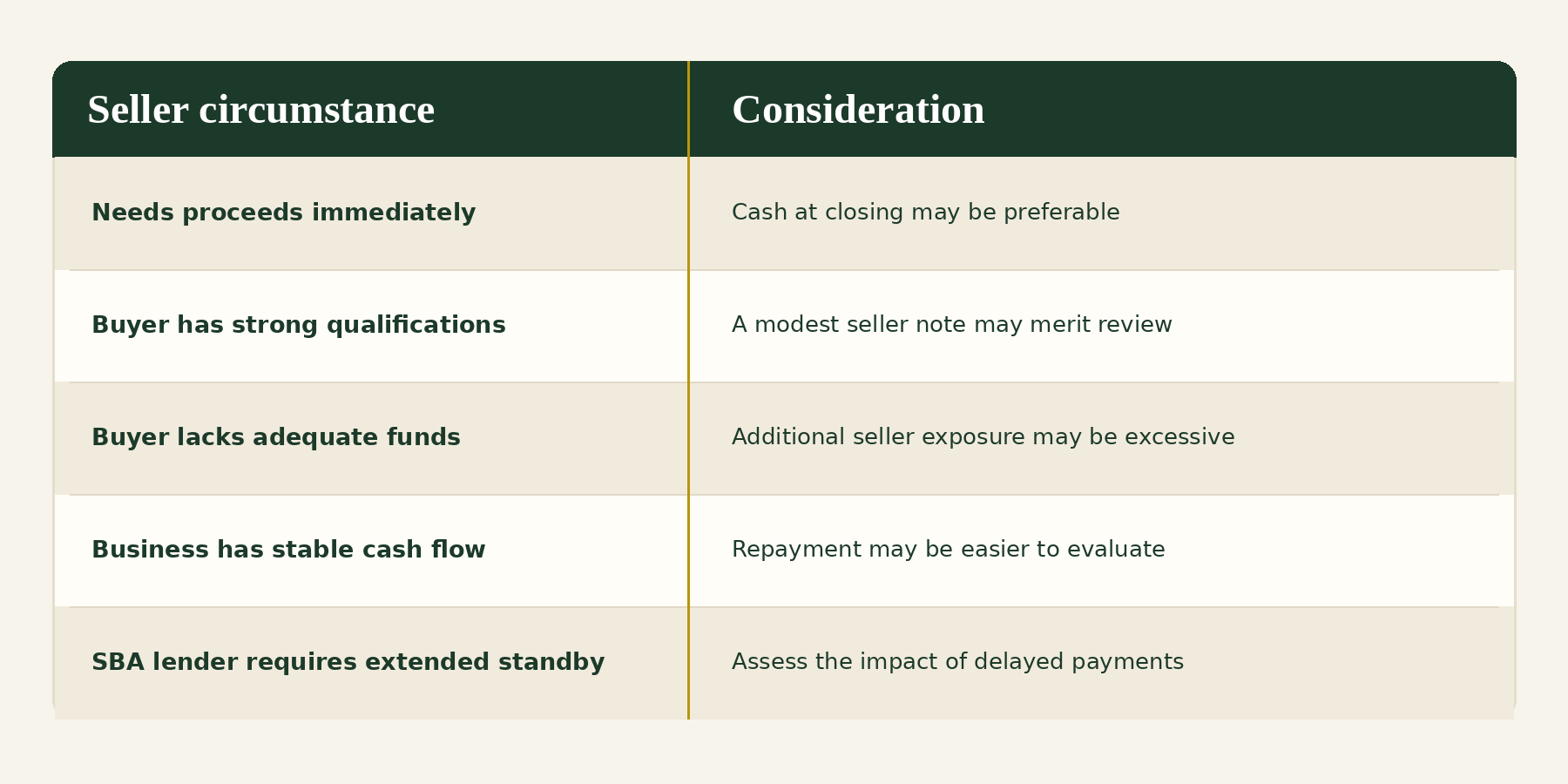
The percentage financed matters, but it is not the only consideration. A small unsecured note to a weak buyer may be riskier than a larger, well-protected note to a financially strong buyer. Evaluate the entire transaction rather than adopting an unconditional policy before reviewing the offer.
What Should Chicago Business Owners Consider?
Owners of manufacturing, distribution, HVAC, landscaping, commercial cleaning, and professional service companies throughout Chicagoland may encounter seller financing requests. An experienced industrial buyer may want to preserve cash for working capital; a home-services buyer may need a structure acceptable to an SBA lender. Those situations warrant different responses.
At Transworld Business Advisors of La Grange, we help owners evaluate business value, buyer qualifications, and proposed transaction structures before committing to terms.
The Bottom Line: A Negotiating Tool, Not an Obligation
The gap between buyer and seller expectations is substantial, but it does not mean owners should automatically accept financing requests. Seller financing can be useful when the buyer is qualified, the note is appropriately structured, and the seller can comfortably bear the risk. For other owners, full payment at closing is the better outcome.
The goal is not simply to agree on a price. It is to negotiate a transaction that provides acceptable proceeds, manageable risk, and a realistic path to closing. If you are considering selling a business in Chicago or the surrounding suburbs, contact Transworld Business Advisors of La Grange for a confidential discussion about your options.
Frequently Asked Questions
Is seller financing required when selling a business?
No. It is generally negotiable, although some buyer financing proposals may depend on the seller’s willingness to hold a note.
How much seller financing is typical?
There is no universal percentage. The amount depends on the buyer, cash flow, price, lender requirements, and negotiated terms. Typically we're seeing 10-20% of the transaction with seller financing, but it may be a business that has some challenges to require more seller financing OR it could be someone within the company that the seller knows to get more comfortable with a larger seller note.
Can I charge interest?
Yes, subject to applicable laws and lender requirements. Consider interest alongside repayment risk and payment timing.
What happens if the buyer defaults?
Remedies depend on the note, collateral, guaranties, lien priority, and law. Recovery is not guaranteed. In some cases, a seller could get the business back while being able to resell it while keeping whatever the buyer paid upfront.
Can seller financing be used with an SBA 7(a) loan?
Potentially, subject to current SBA and lender requirements, including applicable standby and subordination provisions. Our strong advice here is to make sure any seller financing scenario is approved by the SBA lender BEFORE a buyer puts in a letter of intent with deal structure terms.
Is seller financing appropriate if I am retiring?
It depends on how much cash you need at closing and your ability to bear delayed or missed payments.
Does seller financing increase business value?
Not necessarily. Flexibility may help negotiations, but the present value and collectability of the note matter.
Ready For What Comes Next on Your Entrepreneurial Journey?