From Emergency Calls to an Exit Plan: The HVAC Owner Who Finally Saw the Value of What He Built
A personal story-style guide for HVAC business owners who want to understand valuation, buyer confidence, service agreements, confidentiality, and how to prepare for the right exit.
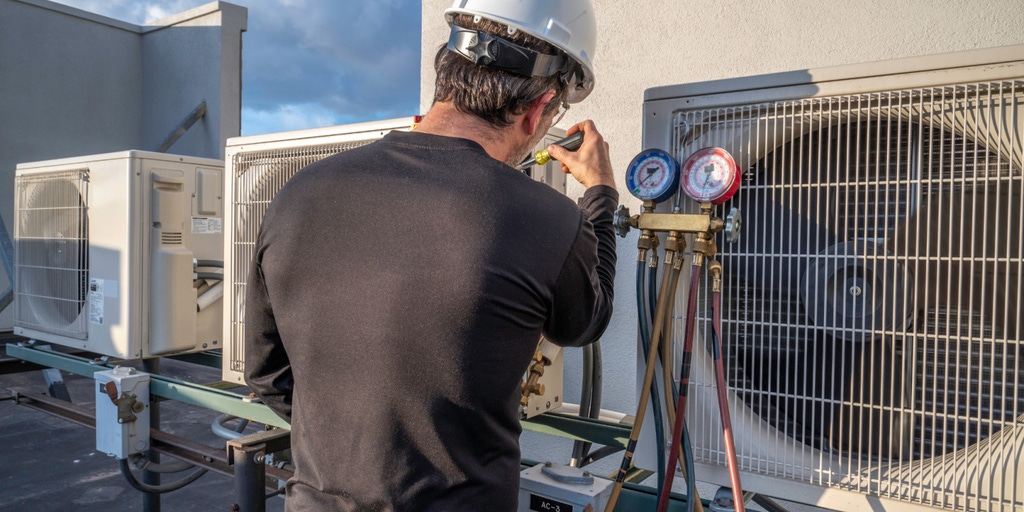
From Emergency Calls to an Exit Plan: The HVAC Owner Who Finally Saw the Value of What He Built
From Emergency Calls to an Exit Plan: The HVAC Owner Who Finally Saw the Value of What He Built
The HVAC owner did not come to us with a polished exit plan.
He came with tired eyes, a ringing phone, and years of responsibility sitting on his shoulders.
It was the middle of a busy season. One customer’s AC had stopped working. Another needed a furnace replacement quote. A commercial client wanted a maintenance visit moved earlier. A technician was asking about a part. A supplier was delayed. A homeowner was upset because the system failed on the hottest day of the week.
He looked at us and said something many HVAC business owners quietly feel but rarely say out loud:
“I built this business, but sometimes I feel like the business owns me.”
That sentence started a very real conversation.
At Transworld Business Advisors MetroWest Boston, Mukesh Sharma, Dhruv D Gije, and our team have worked with and spoken to business owners in trades and service industries who are trying to understand their next chapter. HVAC companies are especially interesting because, from the outside, people may only see trucks, tools, technicians, and emergency calls.
But from a buyer’s perspective, a strong HVAC business can represent much more.
It can represent recurring service agreements. It can represent repeat customers. It can represent trained technicians. It can represent commercial relationships. It can represent a trusted local name. It can represent demand in both summer and winter. It can represent a business people call when comfort, safety, and property value are on the line.
This story is written as a realistic and anonymized example to protect confidentiality, but it reflects the kind of work we do when helping owners understand value, prepare for buyers, and think through the right exit.
The owner originally thought his company’s value was mainly in the trucks, equipment, tools, and revenue.
Those things mattered.
But we helped him see that buyers usually look deeper.
A serious buyer wants to understand how many customers come back, how much revenue is recurring, how many maintenance agreements are active, whether technicians are likely to stay, how calls are dispatched, how profitable installs are compared to service work, whether commercial accounts are stable, how seasonal demand affects cash flow, and how much the business depends on the owner personally.
That was the first shift.
The owner had spent years thinking like an operator.
We helped him start thinking like a seller.
The first thing we looked at was service agreements. For many HVAC buyers, recurring maintenance agreements can be one of the most attractive parts of the business. A company that only waits for emergency calls may still be valuable, but a company with recurring maintenance customers can feel more predictable. Buyers like knowing that customers are already connected to the business before something breaks.
The owner had a list of customers who called regularly, but everything was not fully organized. Some had formal maintenance plans. Some were repeat customers without written agreements. Some commercial clients called every season. Some homeowners had been with the company for years.
To him, they were just “good customers.”
To a buyer, they could be part of the future revenue story.
Mukesh explained it simply: “A buyer does not only want to know who called last month. A buyer wants to know who may keep calling after the sale.”
That became a major part of preparing the business.
Then we looked at the service mix. HVAC companies can earn revenue in different ways: emergency repairs, seasonal maintenance, system replacements, new installations, commercial service, residential service, ductwork, indoor air quality, mini-splits, boilers, furnaces, AC units, heat pumps, and maintenance contracts. Not every dollar is viewed the same.
A buyer wants to know which work is most profitable, which work repeats, which work requires the owner’s direct involvement, and where there is room to grow.
For example, installation work may bring larger tickets, but service agreements may bring stronger customer retention. Emergency work may show demand, but planned maintenance may create stability. Commercial accounts may bring recurring opportunities, but residential relationships may show strong local trust.
The owner had always seen the business as “HVAC work.”
We helped him break it into a buyer story.
That is where sellers often start seeing their own business differently.
Then came the technicians.
In an HVAC company, technicians are not just employees. They are one of the biggest reasons a buyer may feel confident. A strong technician protects the brand on every service call. They enter homes, speak with customers, diagnose issues, explain repairs, recommend replacements, handle pressure, and influence whether that customer ever calls again.
A buyer wants to know whether the technicians are trained, licensed or certified where required, reliable, properly supervised, and likely to stay after a sale. A buyer also wants to know whether the owner is still the main technician, main estimator, main dispatcher, main salesperson, and main problem-solver.
That question matters.
If everything depends on the owner, the buyer may feel risk.
But if the company has a team, a dispatcher, a lead technician, organized job notes, vendor relationships, maintenance plans, and a clear transition plan, the company may feel much more transferable.
The owner admitted that a lot of the business was still in his head. Customer history. Pricing judgment. Technician strengths. Supplier contacts. Warranty issues. Which homes had older systems. Which commercial clients needed priority. Which customers always delayed payment. Which jobs were likely to become bigger opportunities.
That knowledge was valuable, but it needed to be organized.
A buyer cannot buy what they cannot understand.
That is where preparation becomes powerful.
At Transworld Business Advisors MetroWest Boston, we help owners look at the business the way buyers may look at it. We help identify what supports value, what may create concern, and what needs to be explained before going to market. The goal is not to make the business look perfect. The goal is to make the business understandable, credible, and attractive to the right buyer.
Then we discussed the owner’s real goal.
He did not just want to “sell and disappear.” He cared about his employees. He cared about his customers. He cared about the name he had built. He did not want a buyer who would destroy the reputation, upset the technicians, or treat customers like numbers.
He wanted the right exit.
That is a very important point.
For many HVAC owners, the sale is not only financial. It is personal. The company may carry their family name. Their technicians may have been with them for years. Their customers may know them personally. Their reputation may have taken decades to build.
So the question is not only, “How much can I get?”
The better question is, “Who is the right buyer, and how do we protect what I built?”
That is where a professional process matters.
An HVAC business may attract different types of buyers. Some may be individual buyers who want to own and operate. Some may be existing HVAC companies looking to expand. Some may be trade-focused buyers looking for recurring revenue. Some may be strategic buyers interested in technicians, territory, maintenance plans, and customer relationships.
Each buyer may look at the business differently.
A strategic buyer may care about customer routes, service area, technician retention, and cross-selling. An individual buyer may care about training, transition support, cash flow, and whether the business can support their lifestyle. A larger company may care about recurring agreements, customer database quality, dispatch systems, and staff continuity.
That is why positioning matters.
The same HVAC company can look very different depending on how the story is prepared and who the buyer is.
The financial conversation came next. The owner knew the company was busy, but buyers do not buy “busy.” Buyers buy cash flow, confidence, and future opportunity. They want to understand revenue trends, gross margins, labor costs, parts costs, vehicle expenses, insurance, warranty work, callbacks, advertising, owner compensation, and true profitability.
They may also look closely at seasonality. HVAC businesses often have rush periods during heat waves and cold snaps, but buyers want to know how the business performs across the full year. Maintenance agreements, commercial accounts, and diversified service lines can help smooth the story.
The owner had strong revenue, but some numbers needed to be cleaned up and explained. That is very normal. Many owners run good companies but have financials that need preparation before buyers see them.
Clean financials can create confidence.
Confusing financials can slow down a deal.
Then we talked about growth opportunity. The owner had been so busy running the business that he had not fully built the next stage. His website needed work. Reviews were strong but not requested consistently. Maintenance agreements were not being sold aggressively. Commercial accounts could be expanded. Google presence could improve. Customer follow-up could be automated. Dispatch software could be better used. Technicians could be trained to identify replacement opportunities. Indoor air quality, heat pumps, mini-splits, and service plans could be marketed more strongly.
To the owner, these felt like things he never had time to finish.
To a buyer, they could be upside.
That is an important lesson for HVAC owners. A business does not need to be perfect to be attractive. Sometimes buyers like a company because the foundation is strong and the next owner can clearly see how to grow it.
The owner said, “I always thought buyers would only look at my trucks and jobs. Now I see they may be looking at my customer base, my technicians, my service agreements, and my reputation.”
That was the turning point.
He stopped seeing the company only as daily stress.
He started seeing it as an asset.
A business he had built call by call, season by season, customer by customer.
Confidentiality was also a major concern. He did not want technicians to hear too early. He did not want customers to panic. He did not want competitors to use the information. He did not want suppliers, landlords, or commercial clients asking unnecessary questions.
That concern was completely valid.
In service businesses, confidentiality is everything. If the market hears the wrong message too early, it can create unnecessary risk. Employees may become nervous. Customers may misunderstand. Competitors may take advantage.
At Transworld Business Advisors MetroWest Boston, confidentiality is built into the process. We help owners explore options privately, prepare the business story, screen qualified buyers, and share sensitive information only when the proper steps are in place.
That is how a seller protects the company while still exploring an exit.
The owner did not need pressure.
He needed a plan.
He needed to understand value. He needed to organize the business. He needed to know what buyers would care about. He needed to think through transition. He needed to decide what kind of buyer made sense. He needed to protect confidentiality. He needed to prepare the company so the exit would not feel rushed or reactive.
That is what the right exit looks like.
Not panic.
Not guessing.
Not handing the business to the first person who shows interest.
A right exit means knowing what you built, preparing it properly, finding qualified buyers, protecting your team, protecting your customers, and negotiating with confidence.
Before selling an HVAC business, owners should ask themselves honest questions. Are my financial records clear? Can I explain revenue by service type? How many maintenance agreements do I have? Are my technicians likely to stay? Does the business depend too much on me personally? Are dispatch, customer records, and job history organized? Are supplier relationships stable? Are warranties, callbacks, and service records clear? Do I have commercial accounts or recurring customers? Is there room to grow through service plans, replacements, indoor air quality, heat pumps, or stronger marketing?
If the answers are unclear, that does not mean the business cannot sell.
It means preparation may be needed before going to market.
The HVAC owner in this story came in feeling exhausted by the business.
By the end, he saw something different.
He had built a company people called when their homes were uncomfortable, when their systems failed, when their tenants complained, when their businesses needed service, and when they needed someone they could trust.
He had built technicians.
He had built customer relationships.
He had built service history.
He had built seasonal demand.
He had built reputation.
He had built a business that could potentially continue beyond his daily involvement if prepared the right way.
That is what many HVAC owners need to understand.
Your company may be more than trucks and tools.
It may be more than emergency calls.
It may be more than long summers, cold winters, and weekends interrupted by service requests.
It may be a valuable business with real buyer demand.
But buyers need to see the full story.
At Transworld Business Advisors MetroWest Boston, Mukesh Sharma, Dhruv D Gije, and our team help HVAC business owners understand valuation, buyer readiness, confidentiality, and exit planning. We combine local MetroWest Boston knowledge with the reach of one of the largest business brokerage networks in the world, helping sellers explore their options privately and professionally.
Because after years of helping customers stay comfortable, HVAC owners deserve an exit that feels right too.
CTA
Thinking about selling your HVAC business now or in the future? Transworld Business Advisors MetroWest Boston can help you understand your company’s value, prepare for buyer conversations, protect confidentiality, and build the right exit strategy for your next chapter.
By Dhruv D Gije
Ready For What Comes Next on Your Entrepreneurial Journey?